Ask a Hyde Park condo shopper this summer what happens if a building's reserve fund is running close to empty, and most guess wrong. They'll say something like "isn't that illegal now" or "didn't Illinois just pass a law about that." Neither is true. A bill that would require Illinois condo and HOA boards to commission a reserve study every five years, House Bill 2563, has been sitting with its Senate companion, SB 1703, in a legislative holding pattern since last year. As of the most recent Illinois condo and HOA legislative update this June, it still hasn't advanced. For anyone touring courtyard buildings in Hyde Park right now, that stalled bill matters less for what it would do than for what it reveals: the mandate everyone assumes is coming wouldn't have covered most of the buildings on your list anyway.
What Illinois Law Actually Requires Today
Under the Illinois Condominium Property Act, condo boards already have to include a reserve balance statement in every annual budget and disclose whether those reserves are funded according to a plan based on a study. If no study exists, the board is required to say so, plainly, in that budget document. That's the entire current mandate. Nothing in Illinois statute forces a board to commission a study in the first place, only to admit whether it has one, a distinction laid out clearly under 765 ILCS 605/18(a)(9). A board can be fully compliant with Illinois law and still be flying blind on its own capital planning.
The Bill Stuck in Committee
HB 2563 would change the baseline. It defines a reserve study, sets a five-year update cycle for associations with what the bill calls "major shared components or significant infrastructure," structural, mechanical, electrical, or plumbing systems with a replacement cost above $10,000, and requires that a copy be made available to a prospective purchaser on resale, if that buyer asks for it. The official bill record shows it was re-referred to the Rules Committee, the legislative equivalent of a shelf. It has not been signed into law.
Two Details That Would Have Left Most of Hyde Park Uncovered
Even if HB 2563 passes tomorrow, two provisions written into the bill mean it would not have protected most Hyde Park buyers this year.
The first is timing. Associations that have never done a reserve study would get until January 1, 2028 to complete their first one, under the bill's phase-in schedule. A board that has operated for decades without one doesn't become compliant the day the governor signs. It gets a runway of roughly a year and a half.
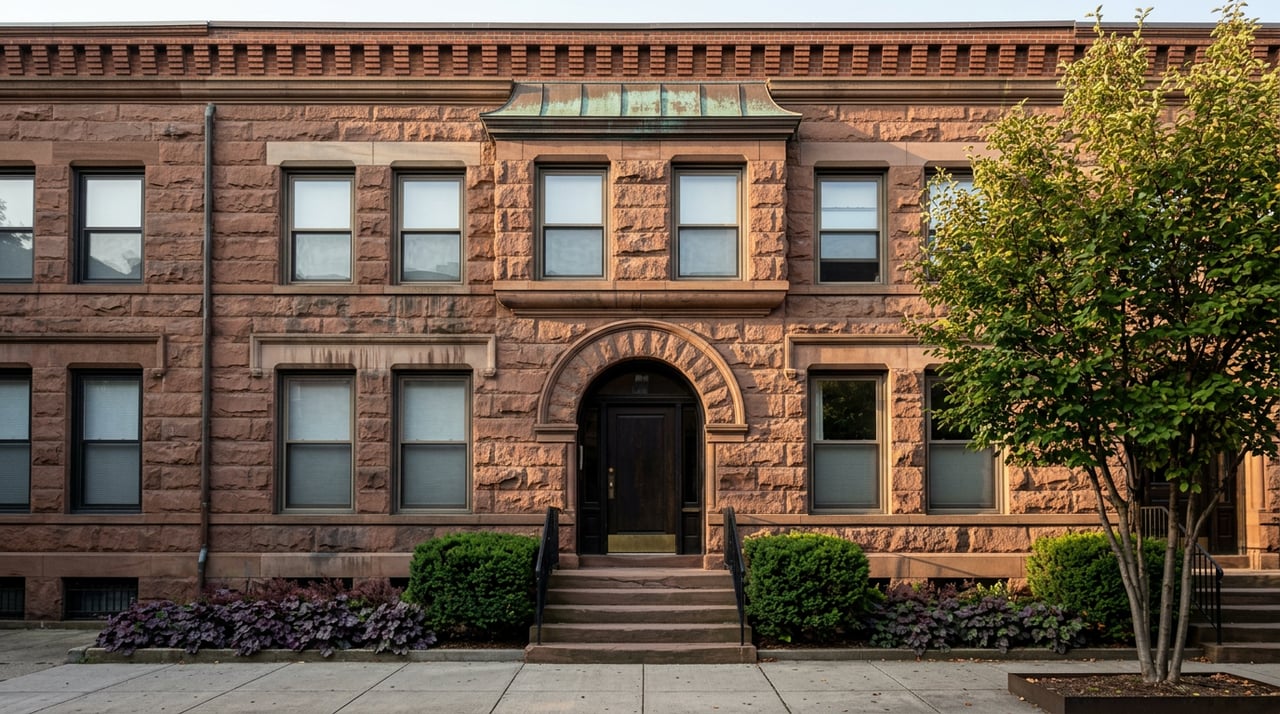
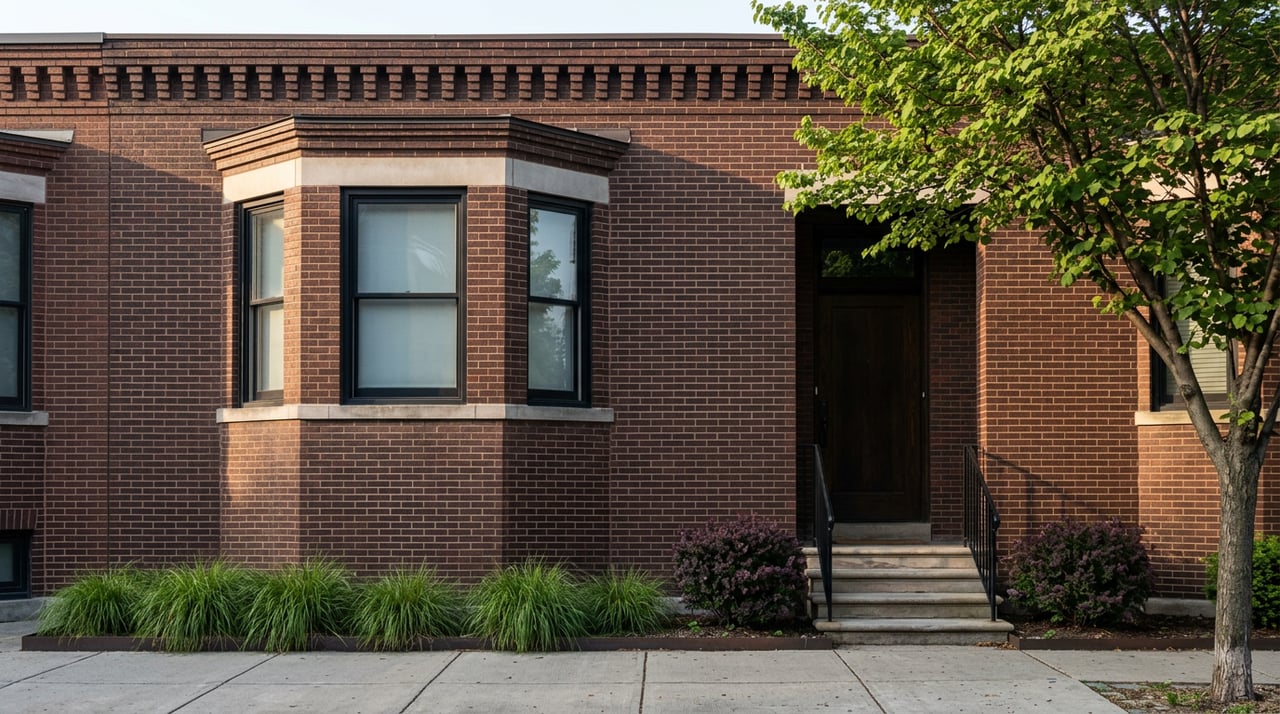
The second is size. The bill exempts associations with 15 or fewer units from the study requirement entirely. Hyde Park's classic courtyard buildings, the six-unit walk-ups tucked along its side streets, the small U-shaped 1920s buildings that give the neighborhood its architectural signature, mostly fall on the exempt side of that line. That housing type exists because of a 1902 Chicago ordinance that capped new multi-unit buildings at 65% lot coverage to guarantee light and air after decades of tenement crowding, a rule that produced thousands of courtyard buildings across the city between 1902 and 1929, Hyde Park included. The mandate buyers keep waiting for was written with larger associations in mind, not the building type most people picture when they picture Hyde Park.
Here's how the two frameworks actually compare:
| Illinois law today | HB 2563, if enacted | |
|---|---|---|
| Reserve study required? | No | Yes, every 5 years, for buildings above the size and infrastructure threshold |
| What must be disclosed | Reserve balance and whether it's funded per a study, in the annual budget | Same, plus the study itself, on request, at resale |
| Buildings exempt | N/A, no mandate exists | Associations with 15 units or fewer |
| Compliance deadline | N/A | January 1, 2028 for associations with no existing study |
Scale Changes the Picture
Building size doesn't just determine legal exposure. It shapes whether a paper trail exists at all.
Vista Homes, built in 1926 as a cooperative and once marketed as the largest co-op building in the world with 120 apartments and what its own advertising called the "World's First Co-Op Garage," is the kind of building where professional management and multi-year capital planning are already baked into daily operations, simply because keeping 120 units running requires it. University Park Condominiums, the large complex designed by I.M. Pei and Araldo Cossutta with on-site management and 24-hour staffing, sits in the same category. Scale like that tends to generate the annual budgets and capital plans that a formal reserve study would only make official.
Contrast that with the small courtyard buildings clustered in the area residents call the Golden Rectangle, roughly the blocks around 56th and Dorchester, where the "board" might be three owners splitting maintenance duties over coffee and no outside reserve analyst has ever walked the property. Those buildings are exactly what the 15-unit exemption would protect from any future mandate, and exactly where a buyer today has the least documentation to work from. The scale that gives a Hyde Park courtyard building its charm is the same scale that keeps it outside the reach of the law meant to protect the person buying into it.
What to Actually Ask, Before the Law Does It For You
None of this means a small courtyard building is a bad buy. It means the questions a future law might force someone else to answer are questions you can ask yourself right now.
- Ask for board meeting minutes from the last three years, not just the current budget. Special assessments get discussed before they get voted on.
- Ask directly whether reserves are funded according to a study. If the answer is no, ask what the current balance covers in dollar terms, not as a percentage.
- Ask for the building's special assessment history, not just whether your specific unit has an open one. Special assessments for major work like roof or elevator replacement in Chicago condo buildings have run from roughly $5,000 to more than $50,000 per unit depending on scope and building size.
- If you're financing with an FHA loan, check the building's approval status before you get attached to a unit. Only about 35% of Chicago condo buildings carry active FHA approval as of 2026, and older buildings with deferred maintenance or lower owner-occupancy rates are the ones most likely to be missing it.
- Do all of this before the five-business-day attorney review period starts, not during it. Illinois attorney review is short by design, meant to confirm terms rather than run a financial investigation on a compressed clock.
The math matters more in Hyde Park than the raw dollar figures suggest. With the neighborhood's median home price at $299,949 as of July 2026 and courtyard condos routinely listing well under $150,000, a $15,000 special assessment isn't a rounding error. It can run close to ten percent of the purchase price. That's a conversation worth having with a seller or their board before you're five days into attorney review with a clock already running.
FAQ
Does a seller have to tell me if their building has a special assessment pending? Illinois law requires the board's annual budget to disclose the reserve balance and whether it's funded per a study. Beyond that baseline, ask directly. A pending assessment usually shows up first in board minutes, not on the listing sheet.
My building only has eight or ten units. Does the size exemption mean I don't need to worry? No. The exemption in HB 2563 would only excuse a small association from a future legal requirement to commission a study. It says nothing about whether the roof needs replacing in three years.
Should I just wait until 2028 for buildings to catch up? The 2028 deadline in the pending bill only applies if the bill becomes law, and only sets a floor for boards with no existing study. It isn't a signal that older Hyde Park buildings are riskier before that date and safer after. The paperwork may eventually change. The building's actual condition won't wait for a compliance deadline to catch up to it.
Hyde Park's courtyard buildings and prewar co-ops are a big part of why people fall for this neighborhood in the first place. None of that architecture comes with a state guarantee that its reserve fund matches its facade. Before you write an offer on a building with more character than paperwork, or decide it's time to sell the home you're in to make room for one, Vergis Eiland can help you read a building's budget the way an underwriter eventually will. Request Your Free Home Valuation to start that conversation.