"What's significant about landmark status is that this building will never be demolished," Chandra Cooper said when Chicago's City Council voted to landmark her great-grandfather's old two-flat on South Lake Park Avenue. That vote happened in the fall of 2021. It took another five years, several rounds of grant funding, and two prior brushes with the wrecking ball before the building she was describing actually opened its doors to the public on a normal, unticketed Saturday.
That Saturday is October 17, 2026.
The Muddy Waters MOJO Museum, the restored home where the father of modern Chicago blues lived from 1954 to 1973, is one of twenty new sites joining this year's Open House Chicago, the Chicago Architecture Center's free annual festival now in its sixteenth year. The festival runs October 17 and 18, spans more than 200 locations across roughly 30 neighborhoods, and typically draws upward of 35,000 visitors. For Kenwood, this is the first time the neighborhood's most storied address functions the way every other Open House Chicago site does: walk up, walk in, no invitation required.
That distinction matters more than it sounds. For years, getting inside 4339 S. Lake Park Avenue meant knowing about a scheduled community event, like the June 2026 evening program that featured live music from Keith Johnson, Waters' great-nephew, plus a panel discussion and an artist showcase, put on with support from the Chicago Department of Cultural Affairs and Special Events and the Coalition of Black House Museums. Those nights were meaningful, but they were occasional, RSVP-driven, and easy to miss if you weren't already plugged into the museum's calendar. Open House Chicago changes the terms. The house is now part of a public circuit, listed alongside more than two hundred other buildings people are actively encouraged to walk through over one weekend, no ticket, no waitlist, no advance notice needed.
A House That Almost Wasn't Here
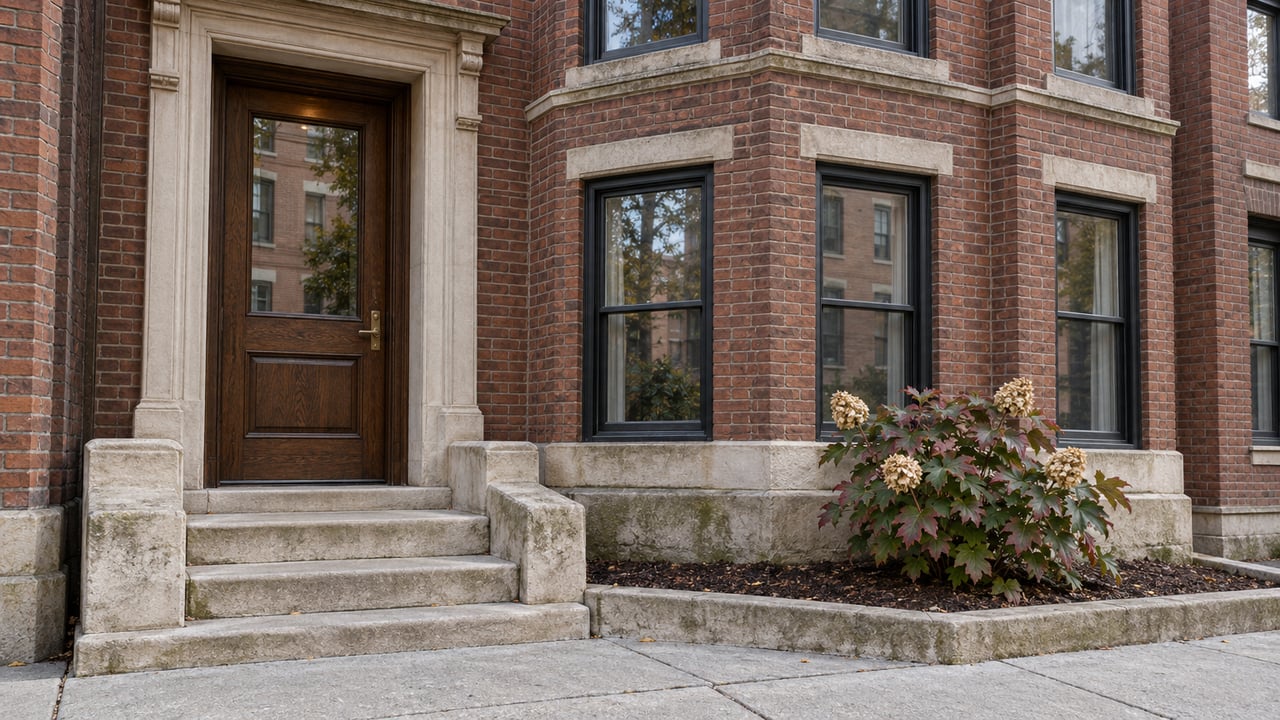
The two-flat itself dates to 1891, decades before Waters ever set foot inside. He bought it in 1954 with his wife Geneva. Waters held the property until his death in 1983, after which it passed to his estate until his granddaughter Amelia Cooper and great-granddaughter Chandra Cooper bought it for $60,000 in 2000, according to Cook County Clerk records. Waters paid off the original mortgage by 1963, despite what family accounts describe as discriminatory lending terms that saddled him with a higher interest rate than a white buyer would have faced. He lived there until 1973, the same year Geneva died, before relocating to west suburban Westmont so three of his children could attend different schools.
During those two decades, the house did more than shelter a family. Waters' band rehearsed in the basement, and those sessions are widely credited with shaping the electrified Chicago blues sound that would go on to influence artists from the Rolling Stones to Jimi Hendrix. Visiting musicians, including Howlin' Wolf, John Lee Hooker, B.B. King, and Chuck Berry, are all documented as having passed through as guests. On sunny days, the band reportedly moved rehearsals outside into the adjacent vacant lot, turning ordinary afternoons into what one project consultant later described as impromptu neighborhood concerts.
None of that history guaranteed the building would survive. City officials came close to ordering its demolition twice, once in the 1990s and again in 2013. If either order had gone through, there would be nothing left to tour this October. Kenwood residents who have lived here through those years have effectively watched a coin flip resolve in the neighborhood's favor.
What It Took to Get to October
The restoration that made this year's opening possible was assembled in pieces, not delivered in one grant:
- A $50,000 grant from the National Trust for Historic Preservation, awarded through the African American Cultural Heritage Action Fund and first reported in 2020, when the project was optimistically projected to wrap within two years.
- A $250,000 grant from the Chicago Landmarks Commission in 2022, following the building's official landmark designation the prior fall.
- A final $10,000 gift from the Pritzker Traubert Foundation, which project consultant Henry Wishcamper described as closing out the last funding gap needed to finish the restoration.
The garden and outdoor performance space adjacent to the house broke ground in April 2024, timed to Waters' birthday, with Amelia Cooper, his granddaughter, on hand for the ceremony. "I know how much the house meant to Muddy," she said that day. The lot, designed with input from Bauer Latoza Studio, is planned to include a mural of Waters alongside seating and a small stage, giving the museum room to host the kind of outdoor programming that once happened informally in the same spot decades earlier.
The renovation split the building's three floors by function. The first floor now houses the museum exhibits, photography, memorabilia, and the family's own account of Waters' life. The basement, once a working rehearsal space, is being converted into an educational area with a recording booth. The third floor is intended to stay residential, likely used for future artist residencies rather than public tours.
What Changes for Kenwood This Weekend
Open House Chicago organizes its map around neighborhood clusters, and this year's combined Bronzeville and Kenwood grouping includes ten sites, giving residents on this side of the South Side a genuine reason to plan a route rather than a single stop. The festival is also debuting a thematic program this year called Built on Belief, which uses three sites just south in Woodlawn to explore how different faith communities shaped that neighborhood over generations. It's a reminder that Open House Chicago isn't only cataloging skylines and lobbies. It's using individual addresses to explain how neighborhoods actually came together, which is exactly the case the MOJO Museum makes on its own.
If you live within walking distance of Lake Park Avenue, this is worth treating as a two-day window rather than a single errand. The museum's hours during the festival will follow Open House Chicago's standard format, meaning no advance ticket and no obligation to arrive at a set time, a real departure from the RSVP-based events the house has relied on until now. Bring a Saturday or Sunday afternoon, and there's no reason not to extend the walk. Kenwood's own Blackstone Library, built in 1904 as the first branch of the Chicago Public Library system, sits within the same historic footprint. The Powhatan Apartments and the Indian Village district a few blocks south offer a different chapter of the neighborhood's architectural range, from blues-era two-flats to early twentieth-century high-rises. None of that requires a festival badge. It's simply what's already here, and this is as good a weekend as any to look at it with fresh eyes.
There's a small irony worth sitting with. Forty-third Street, which forms Kenwood's northern boundary, has long carried the honorary name Muddy Waters Drive. The street sign has said his name for years, while the house itself sat for long stretches uncertain whether it would still be standing the next time anyone checked. This October, that gap finally closes. The name on the street and the building it's named for will, for one weekend, be equally open to anyone who wants to see them.
For residents, that's the real headline. Not that a museum opened, but that the neighborhood's longest-running preservation question quietly resolved into something as ordinary as a Saturday walk. That kind of quiet resolution, where a decades-long fight over whether a building survives ends with the building simply becoming part of everyone's weekend, says something about how this neighborhood treats its own history. It's the same kind of long-view stewardship that shapes how homes here get bought, sold, and cared for long after the moving trucks leave.
If you're curious what that kind of neighborhood attention means for your own address, whether it's an inherited two-flat, a graystone that's been in the family for decades, or a home you're only now starting to think about differently, Vergis Eiland tracks these shifts across Kenwood and the rest of the South Side every week through Market Monday. Request Your Free Home Valuation and find out what your piece of this history is actually worth today.