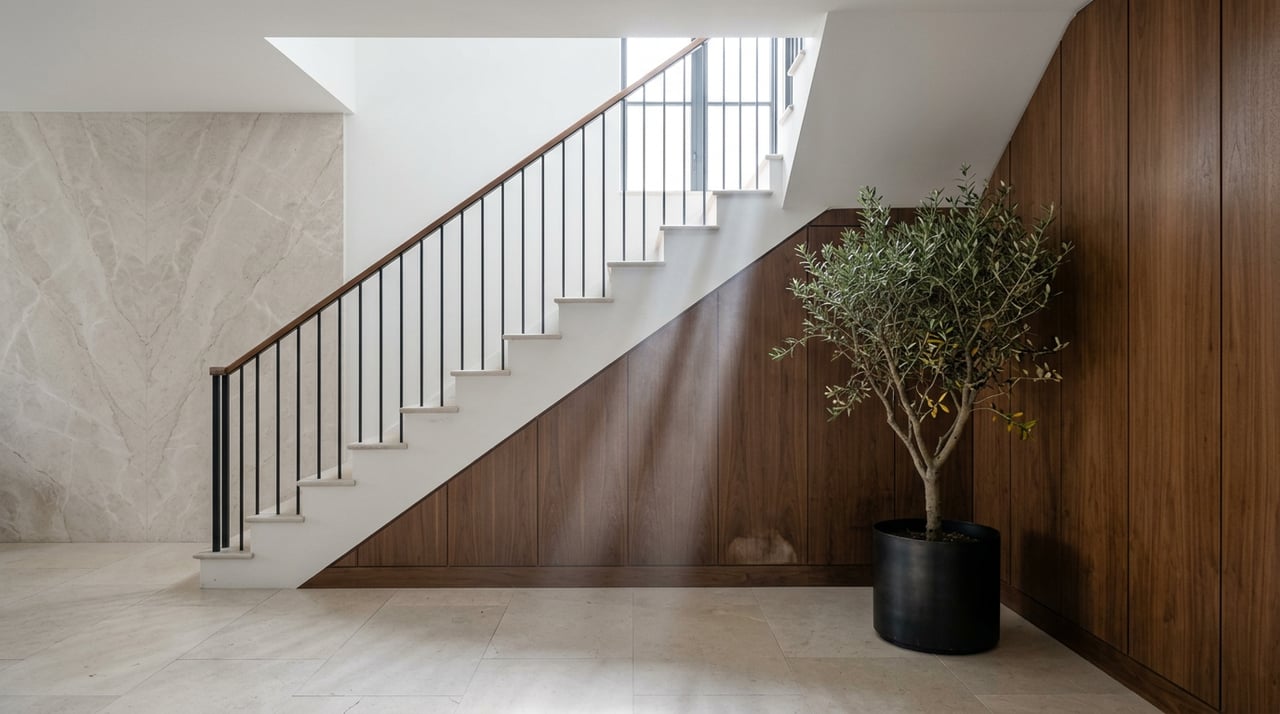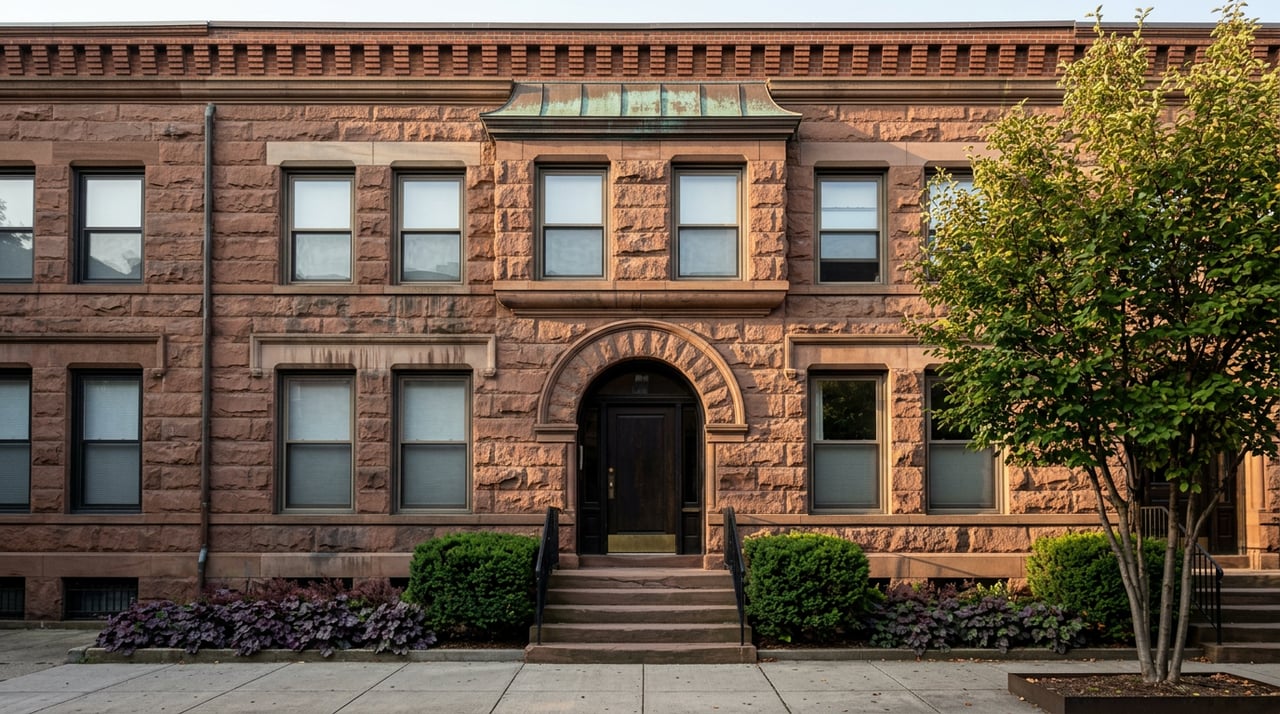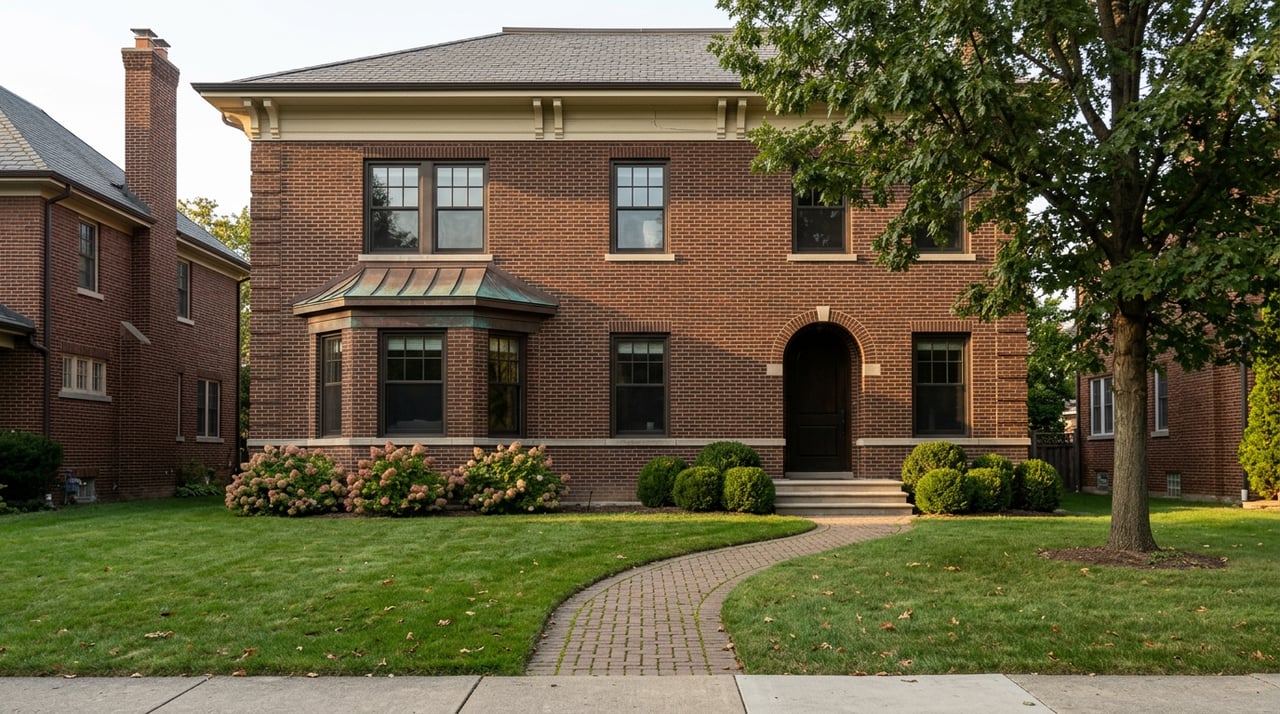
Madelaine and Phillip Gerbaulet-Vanasse spent more than two decades on their Kimbark Avenue house. They stripped layers of paint back to original wood, replaced worn floors with historically accurate boards, and hauled chandeliers up from the basement that had sat disused for years. When Crain's Chicago Business profiled the finished restoration in 2023, the couple was asking $2.35 million for an eight-bedroom, 8,000-square-foot home on a lot two and a half times the standard Chicago 25-by-125. "We stripped a lot of paint," Madelaine told the paper, in the kind of understatement that only comes after living inside a project that long.
That is what a serious Kenwood restoration actually costs in time. What it does not tell you is whether the next house you tour, two blocks over, faces the same regulatory reality. It might not. Kenwood contains two separate historic designations that overlap in places and diverge in others, and only one of them can stop your contractor cold until a city commission signs off.
Two Districts, One Neighborhood
The Chicago Landmark Kenwood District was designated on June 29, 1979, and its boundaries are specific: E. 47th and E. 51st Streets on the north and south, S. Blackstone and S. Drexel Avenues on the east and west. A second, separate Chicago Landmark district, North Kenwood, covers different blocks entirely.
Layered over the top of that is the Hyde Park–Kenwood Historic District, listed on the National Register of Historic Places on February 14, 1979, and expanded twice since, in 1984 and 1986. Its boundaries run wider, from 47th Street to 59th Street and from Lake Park Avenue to Cottage Grove Avenue, which means it stretches south through most of Hyde Park as well. Only the northern slice of that National Register district overlaps the local Kenwood Landmark District, in the same stretch of blocks that includes the Obamas' Chicago home.
Here is the part a listing sheet will not spell out: a National Register designation is largely honorific. It does not, by itself, restrict what an owner can do to a house, and it has no automatic effect on property taxes. A Chicago Landmark designation is different. It comes with binding permit review administered by the Commission on Chicago Landmarks, and no building permit for covered work gets issued until that review is satisfied.
| Framework | Boundaries | Designated | Binding on renovations? |
|---|---|---|---|
| Chicago Landmark Kenwood District | 47th to 51st St, Blackstone to Drexel Ave | June 29, 1979 | Yes, Certificate of Appropriateness required |
| North Kenwood Chicago Landmark District | Separate blocks within North Kenwood | Locally designated | Yes, same review structure |
| Hyde Park–Kenwood Historic District (National Register) | 47th to 59th St, Lake Park Ave to Cottage Grove Ave | Feb 14, 1979 (expanded 1984, 1986) | No, unless using federal or state tax incentives |
One more wrinkle worth knowing before you fall in love with a listing that says "historic district": none of the individually NRHP-listed buildings inside the Hyde Park–Kenwood Historic District, like the Robie House or the Isidore H. Heller House, are actually in Kenwood. They're all in Hyde Park. In Kenwood specifically, the protection that matters is the local landmark layer, not the national recognition.
What Actually Triggers a Certificate of Appropriateness
Inside the Chicago Landmark boundary, exterior alterations, additions, partial demolition, and changes to any interior spaces the designation report calls out all require a property owner to file a Certificate of Appropriateness with the Commission on Chicago Landmarks before the Department of Buildings will issue a permit. Not every project needs a full commission hearing. Minor work can qualify for staff-level review, which moves faster than a public meeting.
The commission also draws a line between contributing and non-contributing structures within a district. A contributing building adds to the historic character the district was designated to protect, and it gets closer scrutiny. A non-contributing building, maybe a 1990s infill house sitting inside the same boundary, gets reduced oversight for certain kinds of work. The designation report for each district identifies which properties are which, block by block.
None of this touches everything in the house. Interior work that does not affect the exterior or a called-out significant space generally proceeds through the normal building permit process without landmark review at all. The trigger is visibility and impact on the district's protected character, not the mere fact that a house sits inside the boundary.
The Timeline Math a Renovation Budget Has to Absorb
Buyers usually plan a renovation timeline around contractor availability and material lead times. Inside a landmark district, there is a third variable: how the Commission on Chicago Landmarks classifies your scope of work.
Targeted single-trade projects, a tuckpointing job, an exterior repaint, a porch restoration, typically run 2 to 8 weeks. Full envelope restorations that combine masonry, painting, and carpentry commonly extend 3 to 6 months. Complex projects that need full commission approval, custom millwork, or specialty decorative trades can stretch 6 to 18 months from the first assessment to a finished job. Window replacement specifically, one of the most common projects buyers plan for right after closing, adds 6 to 10 weeks to a timeline once landmark review enters the picture, because new units have to match the original profile, materials, and muntin pattern before a permit gets issued.
None of this is optional paperwork you can skip if you're in a hurry. The Department of Buildings will not issue the permit until the Certificate of Appropriateness clears. If your financing, your contractor's schedule, or your own move-in date assumes a standard permit timeline, and the house you're buying sits inside the 1979 boundary, that assumption is wrong.
Read the Architect's Name Before You Read the Price
Kenwood's Chicago Landmark district represents one of the city's strongest concentrations of architectural pedigree, with houses by George Maher, Benjamin Marshall, Howard Van Doren Shaw, and Frank Lloyd Wright, spanning Italianate, Colonial Revival, Queen Anne, and Prairie School styles. Listings in the neighborhood also turn up work by Tallmadge & Watson, Solon Beman, and James Gamble Rogers.
A listing that name-drops one of these architects is telling you something practical, not just aspirational. Houses of that pedigree, in that era, on those blocks, are far more likely to be classified as contributing structures inside the binding landmark district than a newer infill on the same street. That name is a signal worth chasing down before you write an offer, not after.
Before You Waive the Attorney Review Contingency
A few moves before closing can save months of surprise once you own the house.
- Confirm the exact designation status of the address, not just the neighborhood. A property can sit inside the National Register district, the Chicago Landmark district, both, or neither, depending on which side of Blackstone or Drexel it falls on.
- Ask whether the house is classified as contributing or non-contributing within its landmark district. That single fact changes how much scrutiny any future exterior work will face.
- Request the seller's prior Certificates of Appropriateness and permit history for any exterior work already completed, especially windows, additions, or roofline changes. Unpermitted work on a landmark property does not disappear at closing. It follows the house.
- If your renovation plans include anything visible from the street, build the landmark review timeline into your budget and your interim housing plan before you commit to a closing date.
FAQ
Does a National Register listing raise my property taxes? Generally, no. National Register designation is honorific, and by itself it does not affect property values or property taxes, since National Register-listed properties can still be altered or demolished without local review.
Can I still replace windows if my house is inside the landmark district? Yes, but new units need to match the historic profile, materials, and pattern of the originals, and the review adds time before the city will issue a building permit.
Does Chicago Landmark status come with a property tax break? Not for a single-family home. Cook County's Class L incentive, the main property tax break tied to landmark status, is built for commercial, industrial, and income-producing non-profit buildings, not owner-occupied houses.
Kenwood rewards patience and pedigree in equal measure, but only if you know which rulebook applies to the address in front of you before you're the one holding it. If you're weighing a historic Kenwood property and want someone to run that due diligence before you're locked into a contract, Vergis Eiland has spent two decades working these blocks and can tell you, address by address, which district you're actually buying into. Request Your Free Home Valuation to start the conversation.