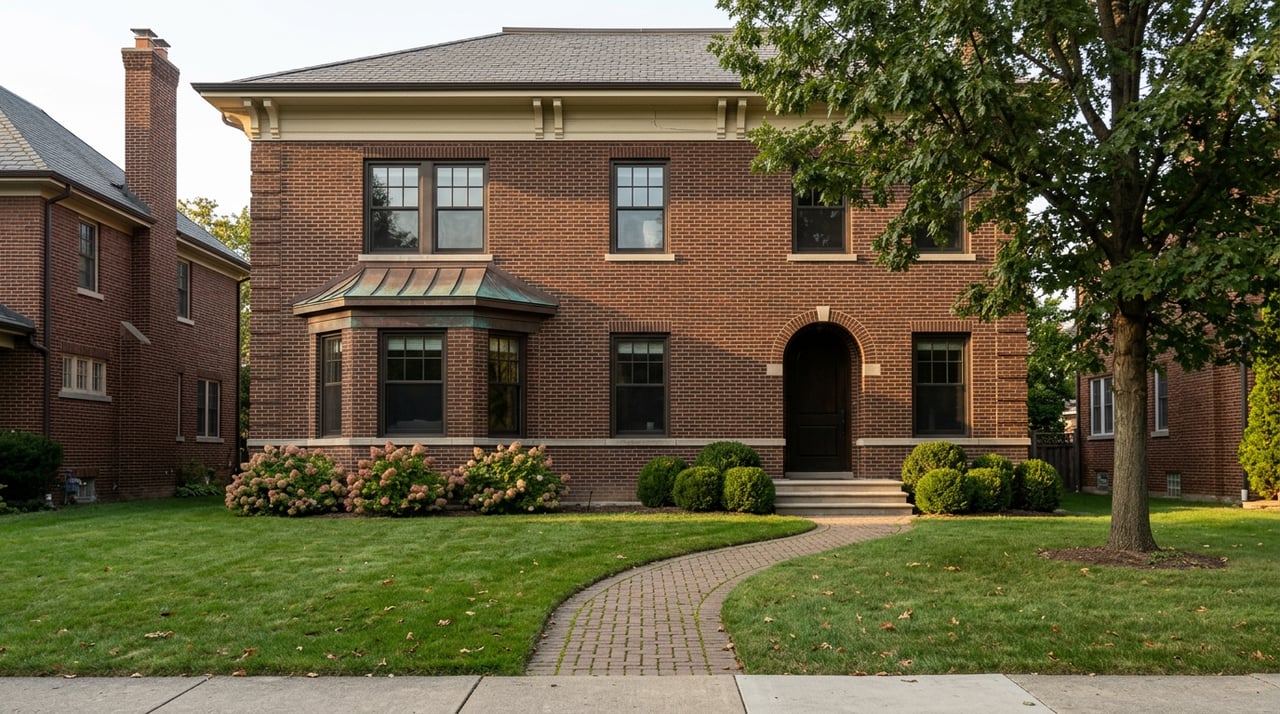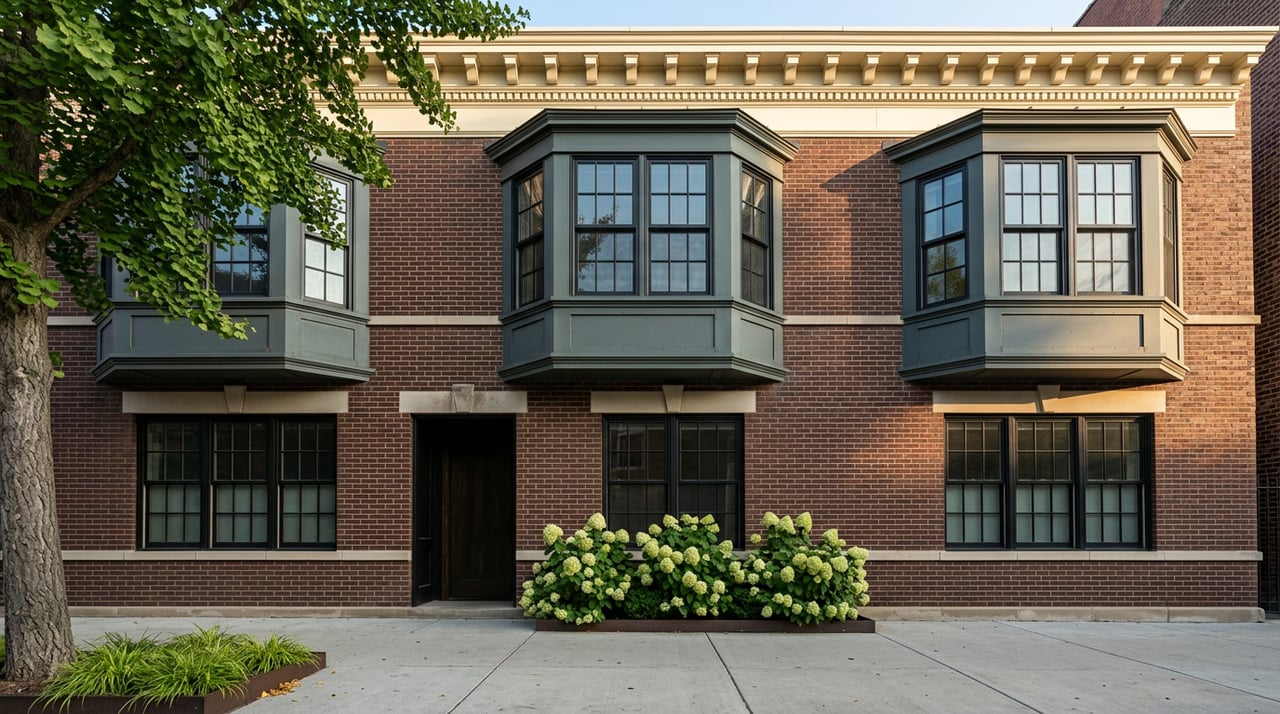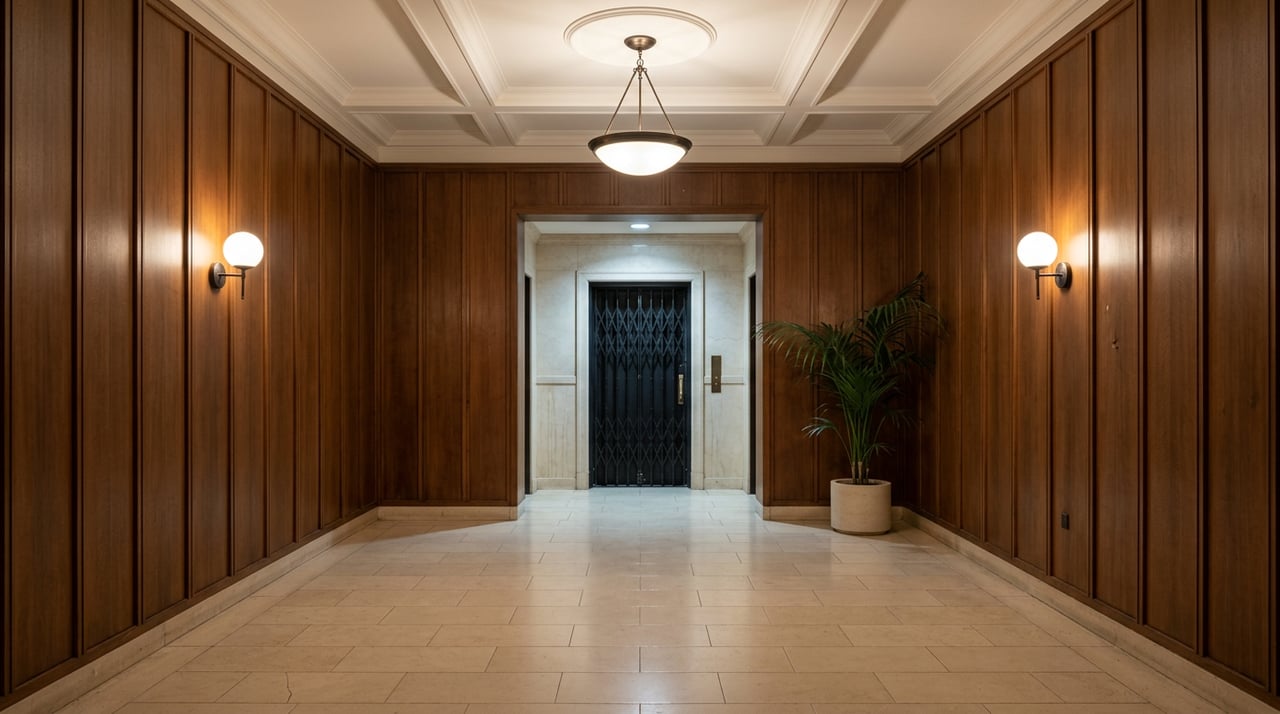
Walk one block of North Lake Shore Drive and you can find two apartments that look nearly identical from the sidewalk: same limestone facade, same lake view, same doorman under the same awning. One is listed at a per-square-foot figure that would be unremarkable for the Gold Coast. The other is listed at a number that looks like a mistake.
It isn't a mistake. It's a co-op. And the gap between those two prices is the market doing exactly what it's supposed to do: pricing in three specific frictions that only appear once a buyer signs a contract.
The Discount Is Real. It Has a Structural Cause.
Chicago is the second-largest cooperative market in the country after New York, with roughly 200 cooperative apartment buildings concentrated in the Gold Coast, Lincoln Park, Hyde Park, and along the North Shore. The condo market outnumbers co-ops by about 20 to 1. That imbalance matters, because it means every co-op listing in the Gold Coast is competing for buyer attention inside a system optimized for deeded ownership.
As of February 2026, Redfin's neighborhood snapshot placed the Gold Coast median sale price in the mid-$500,000s with price per square foot trending in the high $300s. That number blends both ownership types. Pull the co-ops out and the per-square-foot figure for comparable pre-war stock along Lake Shore Drive routinely lands well below that median, while condos in newer full-service towers on the same blocks trade above it.
The reason is not condition. It is not view. It is that a co-op purchase involves three transactional realities a condo purchase does not.
Friction One: The Share Loan
When you buy a co-op, you are not buying real estate. You are buying shares in an Illinois corporation that owns the building, plus a proprietary lease for a specific apartment. That distinction is legal boilerplate until you try to finance it.
A share loan is a specialized product. Only a handful of Chicago lenders write them, and most are local portfolio banks familiar with the individual buildings. Down payment expectations sit higher than a conforming condo mortgage: financing on Gold Coast co-ops is often capped at 50 to 70 percent of purchase price, meaning a buyer needs 30 to 50 percent in cash before board review begins. FHA and VA loans are effectively unavailable in most Chicago co-ops unless the building has completed a specific program approval, which the majority have not.
The Illinois Condominium Property Act, by contrast, gives condo buyers access to the full conventional and government-backed mortgage stack. A 20 percent down payment condo buyer at 1300 N Astor and a share-loan buyer at 1500 N Lake Shore Drive are not shopping in the same market, even if the apartments are two blocks apart.
Friction Two: The Board
Co-op boards in Illinois hold approval rights over stock transfers, and they exercise them. A serious buyer completes what agents around the city still call a Thomas Report: a full financial disclosure package with tax returns, bank statements, personal references, and an in-person interview. Practical timelines run four to eight weeks for board package preparation and interview scheduling, and buildings that meet quarterly rather than monthly can push that to ninety days.
The condo path skips this entirely. Illinois condo transfers move by deed with association disclosures. The board can enforce rules, but the ability to reject a qualified buyer outright is far more limited.
For the buyer, the friction is real. For the seller, it compounds. Every board denial resets the marketing clock. Every extended interview cycle keeps the listing exposed to broader market drift. The discount is partly the market paying the eventual buyer to absorb that risk.
Friction Three: The Sublet Clause
Most Chicago co-ops restrict subletting outright, and a few allow it only on a limited basis. Many also impose minimum owner-occupancy periods and post-closing liquidity tests. Investor capital that routinely bids on Gold Coast condos is functionally excluded from the co-op market.
That does two things to price. It removes the highest-velocity segment of the buyer pool, which lengthens days on market. It also removes the buyers who bid most aggressively on rental math, which caps the top end of comparable sales. What remains is a self-selecting group of owner-occupants with cash liquidity and a long expected hold period.
The Same Transaction, Side by Side
| Transaction element | Gold Coast condo | Gold Coast co-op |
|---|---|---|
| What you own | Deed to unit plus interest in common elements | Shares in corporation plus proprietary lease |
| Governing law | Illinois Condominium Property Act | Corporate bylaws and proprietary lease |
| Financing | Standard conforming, FHA, VA available in eligible buildings | Share loan from limited lender pool; often 50 to 70 percent LTV cap |
| Buyer approval | Association disclosures; outright rejection rare | Board application, financial packet, interview; discretionary approval |
| Board package timeline | Standard closing timeline | Add 4 to 8 weeks; up to 90 days in quarterly-meeting buildings |
| Monthly cost structure | Assessment plus separately billed Cook County property tax | Single maintenance fee bundling operations, taxes, and any building debt service |
| Sublet policy | Often restricted, rarely prohibited | Frequently prohibited or tightly capped |
| Investor demand | Present | Effectively excluded |
What the Maintenance Fee Actually Includes
A first pass at co-op fees looks alarming. A condo two blocks away might carry an $850 monthly assessment. The co-op is $2,400. That gap does not mean the co-op is more expensive to operate.
Co-op maintenance charges typically bundle building operations, staffing, insurance, reserves, the shareholder's proportionate property tax pass-through, and often debt service on an underlying building mortgage. The condo owner's $850 assessment does not include their Cook County property tax bill, which arrives separately, and does not include debt service, because condo buildings rarely carry building-level mortgages.
Compare the true monthly carrying cost side by side and the gap narrows considerably, sometimes to zero. Property taxes on co-op shareholders tend to run lower per unit than on condo owners at similar sale prices, because the corporation is taxed on the building's assessed value rather than on individual deeded units. That is a real dollar difference that shows up every month.
The buyer who screens on assessment alone misreads the market. The buyer who screens on total monthly cost sees the co-op discount correctly.
The Renovation Timeline Nobody Prices In
Pre-war buildings on the Gold Coast are a preservation exercise before they are a design exercise. City of Chicago Standard Plan Review runs 7 to 9 weeks as of March 2026. Co-op board renovation approval, which is a separate process from the buyer approval, adds another 30 to 45 days in buildings that meet monthly and up to 90 days in buildings that meet quarterly.
For a landmark address like the Astor Street Historic District, exterior work also faces landmark review focused on elements visible from the public right of way. Interiors sit outside that review, but structural, mechanical, and window work in a pre-war co-op often touches building systems, which the board must sign off on.
A buyer planning a full gut of a vintage kitchen at, say, 1120 N Lake Shore Drive or the Rebori twin buildings at 40 to 50 W Schiller should budget the board timeline before the contractor timeline. Custom cabinetry alone runs 6 to 12 weeks, and imported European appliances stretch to 16 or more.
Who the Discount Is Actually For
The Gold Coast pre-war co-op market is built for a specific buyer: cash-liquid, owner-occupant, long-hold horizon, indifferent to future rental optionality, and comfortable with a board's oversight of who moves in and what gets renovated. For that buyer, the discount is not a discount. It is compensation for accepting frictions that do not apply to their life.
The buyer who might want to convert the unit to a pied-à-terre, pull equity through a high-LTV refinance, rent it during a two-year job posting overseas, or resell to an investor within five years is looking at a different asset. The frictions apply to them. The discount is priced correctly for their exit.
Named buildings that sit inside this trade routinely: 1500 N Lake Shore Drive, the McNally and Quinn building from 1931 with 47 custom-designed floor plans; 1200 N Lake Shore Drive, built one unit per floor with maids' rooms; 1120 N Lake Shore Drive; 1448 N Lake Shore Drive; the Mies van der Rohe design at 860 N Lake Shore Drive; and the Rebori twins at 40 to 50 W Schiller. Each has its own board culture, financing history, and reserve position. The discount is not uniform across them, and that variation is the actual work of pricing a Gold Coast purchase.
FAQ
Do co-op sales close faster or slower than condo sales in the Gold Coast? Slower on average. The board packet, financial review, and interview typically add four to eight weeks on top of a standard closing schedule. Buildings with quarterly board meetings can extend that further. A seller who prices for this reality tends to net closer to list.
Are property tax bills really lower in a co-op? Per unit, in the same sale price band, they generally run lower because the corporation is assessed as a single property and the shareholder pays a proportionate share through maintenance rather than a separate Cook County bill. The savings are meaningful monthly but should be verified against the building's most recent assessment.
What documents matter most before making an offer on a Gold Coast co-op? The proprietary lease, the corporation's bylaws, two to three years of financial statements, the reserve study, the most recent capital plan, the sublet policy, and the terms of any underlying building mortgage. In pre-war stock along Lake Shore Drive, the reserve study and the facade and window capital plans do more to predict the next five years of cost than any market comp will.
If you're weighing a specific Gold Coast building against another, or trying to read a co-op offering package before your attorney does, Vergis Eiland can walk you through the mechanics building by building. Request Your Free Home Valuation to start the conversation.