Trying to decide between West Town vintage charm and new construction? You are not alone. In a neighborhood where older walk-ups sit alongside newer infill condos, the choice often comes down to what kind of daily living experience and future upkeep you want. If you are weighing character against convenience, this guide will help you compare both paths with more confidence. Let’s dive in.
Why this choice matters in West Town
West Town is a strong place for this comparison because the housing stock is truly mixed. According to CMAP, 42.2% of housing units were built before 1940, while only 11.8% were built in 2010 or later. The area is also dominated by smaller multi-unit buildings, with 3 to 4 unit properties making up 32.0% of the stock and 5 to 9 unit buildings making up 23.1%.
That mix helps explain why many buyers in West Town, Wicker Park, and Ukrainian Village are not choosing between totally different lifestyles. Instead, you are often comparing a vintage condo in a low-rise building with a newer condo a few blocks away. The real question is usually how much original character, maintenance risk, and project work you are willing to trade for newer systems and more predictability.
What gives West Town its vintage appeal
Parts of West Town are defined by official Chicago Landmark districts and preserved streetscapes. The City of Chicago describes Wicker Park as reflecting architectural styles common from the post-Great Fire era through the early 20th century. Ukrainian Village is noted as a well-preserved mix of worker cottages, two-flats, three-flats, single-family homes, and larger apartment buildings.
That architectural depth shapes the buying experience. In many parts of West Town, a vintage home is not just an older property. It is part of a broader streetscape that gives the neighborhood its identity.
Vintage homes often mean walk-up living
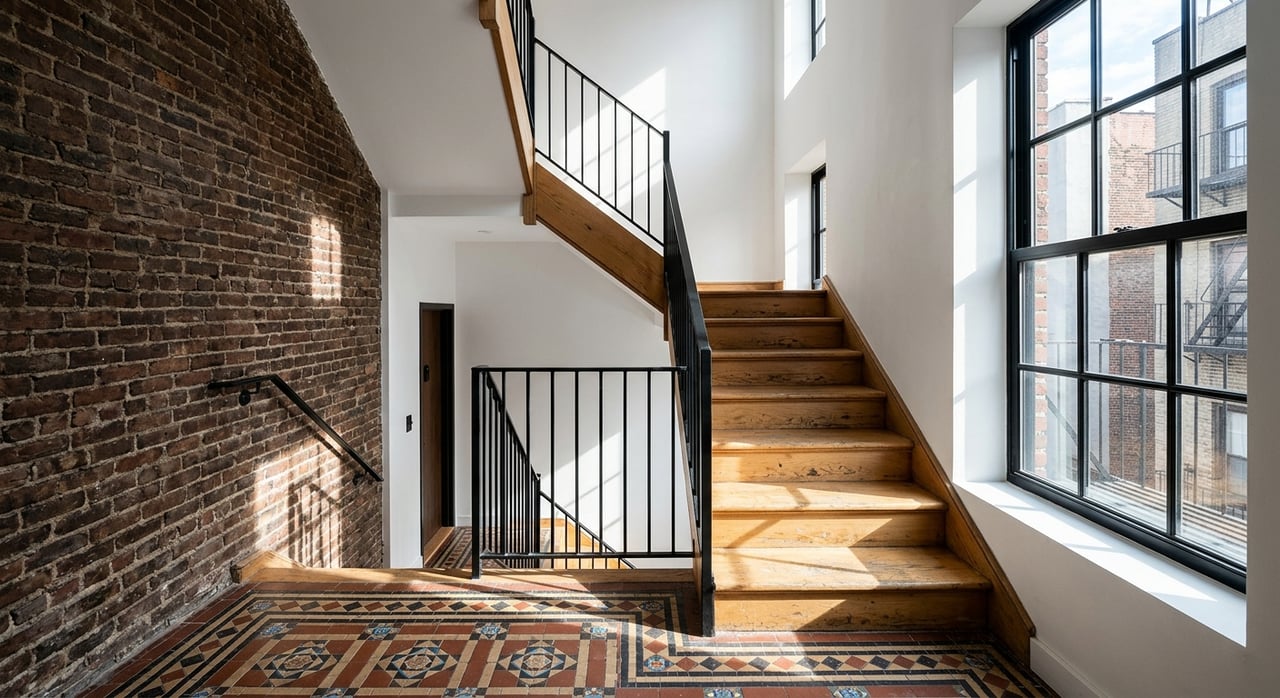
A walk-up is a building without an elevator. In West Town, that often means living in a 2-unit, 3-unit, 4-unit, or small apartment-style building with stairs as part of everyday life.
For some buyers, that tradeoff feels worth it. You may get details and layouts that feel distinctive, along with a building style that fits the block in a way newer construction sometimes does not.
Vintage units can vary a lot
One important thing to know is that vintage homes are rarely identical from unit to unit. In the same building, one condo may be lightly updated while another has had major work done over time. That means you need to look beyond surface finishes and ask what has actually been improved.
This is especially important in West Town because so much of the housing stock is older. Two homes that look similar online can be very different once you review their systems, windows, insulation, and past renovation history.
The upside of buying vintage in West Town
For many buyers, the biggest draw is character. A vintage home can offer architectural style and a sense of place that feels tied to West Town’s history. In landmarked areas, that character is also part of what helps preserve the look and feel of the block.
The City of Chicago also notes that landmark designation can be an asset for some buyers, and studies have generally not shown a negative effect on property values. Routine maintenance such as painting and minor repairs does not require a building permit, and the city says its Rehabilitation Code can provide flexibility to help preserve significant features.
Vintage can appeal to value-add buyers
If you like the idea of making thoughtful improvements over time, a vintage property may offer that opportunity. Interior updates can improve function and comfort without changing the basic footprint of the building.
That said, if the property is in a Chicago Landmark district, some work may require Commission review and written approval. The city states that alterations, additions, demolition, or new construction affecting landmarked properties or structures within a landmark district require review, especially when visible exterior features are involved.
The tradeoffs that come with vintage homes
Older homes usually come with more unknowns. Roofs, windows, plumbing, electrical systems, and insulation may have been updated at different times, or not fully updated at all. That can affect both your immediate costs and your long-term planning.
There is also an important health and safety consideration with older properties. The EPA states that the older a home is, the more likely it is to contain lead-based paint, and it estimates that 87% of homes built before 1940 have some lead-based paint.
Lead disclosures matter in older homes
If a home was built before 1978, ask for the required lead disclosure and any available records from past lead inspections or risk assessments. The EPA says most pre-1978 housing is covered by the Real Estate Notification and Disclosure Rule.
If you plan to renovate, that question becomes even more important. The EPA notes that renovation, repair, and painting work in pre-1978 homes can create dangerous lead dust, especially when painted surfaces, trim, or windows are disturbed.
What new construction changes for buyers
New construction is appealing for reasons that go beyond finishes. The main advantage is often the building envelope and the major systems behind the walls. That includes insulation, air sealing, windows, and mechanical components that are generally newer and more consistent.
For many buyers, that means a simpler ownership experience in the first few years. You may face fewer near-term replacement questions and less uncertainty about how the home performs in different seasons.
Energy efficiency is a major benefit
ENERGY STAR says that comprehensive air sealing, properly installed insulation, and high-performance windows can improve comfort, support durability, reduce maintenance costs, and lower monthly utility bills. It also states that certified homes deliver at least 10% savings on annual utility bills.
ENERGY STAR NextGen homes and apartments are described as being about 20% more energy efficient than homes built to typical code levels. Features can include heat pumps, heat pump water heaters, electric cooktops, and EV charging capability.
New does not always mean unrestricted
A newer building may still be subject to review if it is located in a landmark district. In West Town, that matters because some of the neighborhood’s most sought-after areas are protected by official landmark designations.
So while new construction can offer predictability, it is still smart to confirm whether district rules affect exterior changes, additions, or future plans.
How to compare vintage and new construction
The best choice usually comes down to your priorities, not a universal rule. West Town’s housing profile supports both options, especially since the area includes many smaller households and a large share of 2-bedroom homes.
Use this simple framework when comparing properties:
Choose vintage if you value:
- Architectural character and older building style
- A home that feels tied to West Town’s historic fabric
- The possibility of making interior updates over time
- A lower-rise, walk-up building format
Choose new construction if you value:
- Newer insulation, windows, and mechanical systems
- Better energy performance and lower utility use
- Fewer immediate maintenance surprises
- A more predictable ownership experience early on
Smart questions to ask during showings
Whether you lean vintage or new, the right questions can save you time and stress later. In West Town, these are some of the most useful ones to ask.
Ask about landmark status
Is the property in a Chicago Landmark district or an individually designated landmark? If the answer is yes, ask which exterior features are protected and what kinds of changes require review.
Ask what has been updated
Try to get dates and details for the roof, plumbing, electrical, windows, insulation, and heating or cooling systems. A standard home inspection may review many of these items, but Fannie Mae notes that it is not a full electrical inspection and does not determine energy efficiency or code compliance.
Ask if you need specialists
Some issues fall outside a standard inspection. Fannie Mae notes that concerns such as lead, radon, mold, asbestos, pests, and similar hazards may require separate specialists.
That matters in both older and newer buildings, but it is especially important when you are comparing homes with different ages, materials, and renovation histories.
The best fit depends on your ownership style
In West Town, vintage walk-ups often fit buyers who enjoy character, do not mind stairs, and are comfortable taking on age-related updates or preservation-related limits. New construction often fits buyers who want newer systems, better efficiency, and fewer immediate surprises.
Neither path is automatically better. The better choice is the one that matches how you want to live, how much project work you want to manage, and how much predictability you want in the first few years of ownership.
If you are comparing West Town homes and want a clear, data-informed strategy for what to prioritize, working with an experienced local advisor can make the process much easier. For tailored guidance on buying in Chicago, connect with Vergis Eiland.
FAQs
What is a vintage walk-up in West Town?
- A vintage walk-up in West Town usually refers to an older low-rise building without an elevator, often in a 2-unit to 9-unit format.
Are many West Town homes older properties?
- Yes. CMAP reports that 42.2% of West Town housing units were built before 1940.
Does new construction in West Town usually offer better efficiency?
- Often, yes. Newer insulation, air sealing, windows, and systems can improve comfort and lower utility costs.
Do landmark rules affect West Town properties?
- Yes. In landmark districts, certain exterior changes, additions, demolition, and new construction may require City of Chicago review and approval.
Should you ask about lead paint in a vintage West Town home?
- Yes. If the home was built before 1978, ask for lead disclosures and any available records related to past lead inspections or risk assessments.