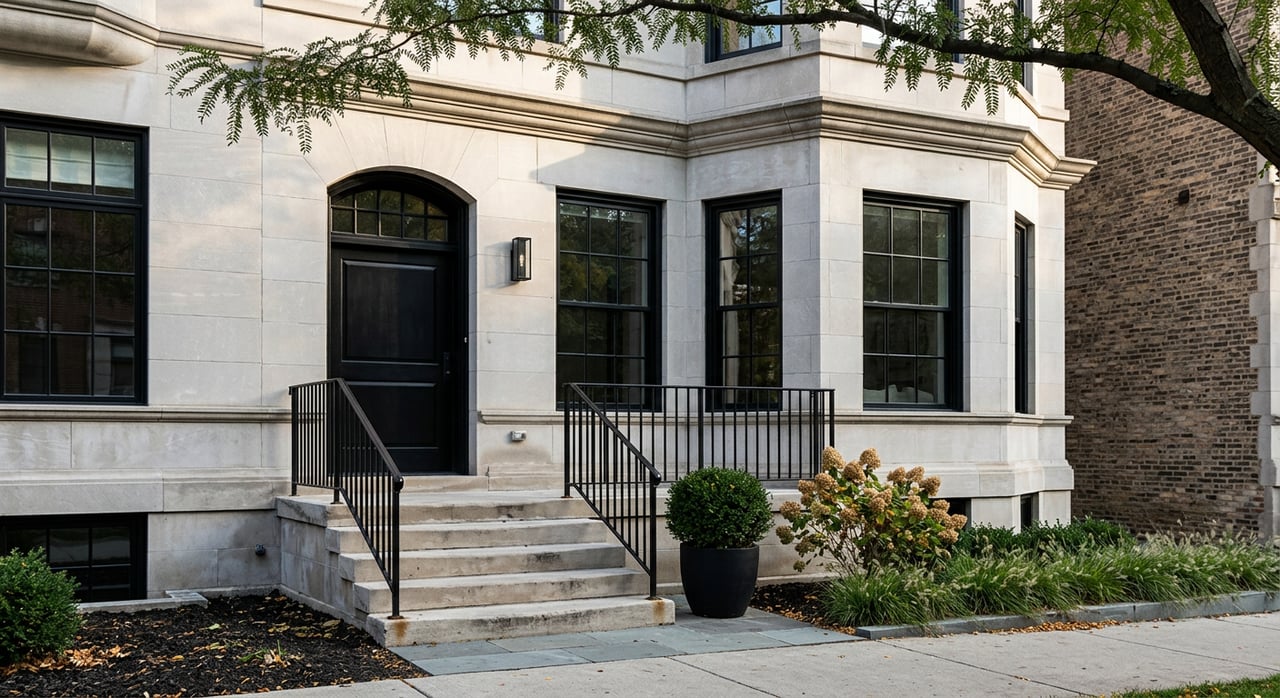
Love the look of classic Chicago greystones and architect‑designed mansions but not sure whether Kenwood or Bronzeville is a better fit? You are not alone. Both neighborhoods offer rich historic architecture, different purchase paths, and unique renovation considerations. In this guide, you will learn how the areas compare on architecture, budgets, renovation rules, transit, and day‑to‑day living. Let’s dive in.
Quick take: which fits you
- Choose Kenwood if you want larger lots, landmark‑quality single‑family homes, a quieter lakeside feel, and you are prepared for higher‑scale restoration budgets.
- Choose Bronzeville if you want a dense mix of greystones and rowhouses, more multi‑unit options for investing, and active commercial corridors at a generally lower entry price.
Architecture and character
Kenwood: landmark estates and lake adjacency
Kenwood is known for large single‑family houses, architect‑designed residences, and a core historic district with high‑quality late‑19th and early‑20th‑century styles like Prairie School, Queen Anne, and Colonial Revival. You will also find noteworthy lakefront apartment houses. The city’s Kenwood District overview highlights signature homes and the review process that helps preserve the area’s character.
Where to look: southern Kenwood around 47th to 51st and Drexel to Blackstone, the “Indian Village” cluster, and blocks that transition to Hyde Park often showcase architecturally significant homes and apartments.
Bronzeville: Black Metropolis heritage and greystone density
Bronzeville is culturally rich and packed with classic Chicago building types: three‑story greystones, ornate brick rowhouses, historic commercial buildings, and important civic landmarks. The city’s Black Metropolis–Bronzeville landmark group details anchors like the Victory Monument and the Chicago Defender Building that shape the neighborhood’s identity.
Where to look: corridors such as King Drive, Indiana Avenue, and Prairie Avenue offer consistent historic streetscapes, with restored greystones and rowhomes mixed with newer infill.
Budget and buying context
Neighborhood price snapshots can differ by source. Aggregators often report contrasting figures because one may average across property types while another tracks recent MLS closings. Treat these as directional. The decisive numbers are recent comps on your target blocks.
- Kenwood: Expect upper‑tier single‑family homes, especially in Indian Village and landmark blocks, to reach high‑six to low‑seven figures depending on lot size and restoration level. Smaller condos or single‑family fixers can trade for less, but condition drives the spread.
- Bronzeville: Many renovated greystones and fully updated homes list in roughly 300,000 to 600,000 dollars depending on size, finishes, and location. Multi‑unit buildings can offer value for investors seeking cash flow.
Practical tip: pair neighborhood context with block‑level comps and a renovation budget before you set your offer strategy.
Renovation and maintenance realities
Historic charm comes with specialized upkeep. Plan your scope and contingency early so you can move confidently when the right property hits the market.
- Masonry and tuckpointing. Greystones and brick facades often need periodic tuckpointing, stone lintel repair, and porch work. Large facades and corner lots increase cost. Get quotes from firms experienced with historic masonry. For a sense of cost drivers in Chicago, review tuckpointing considerations.
- Foundations and basements. Older foundations can show settlement or moisture issues. Full waterproofing and drain tile can materially increase project budgets. Always budget for an inspection.
- Electrical, plumbing, and HVAC. Pre‑1950s buildings may have knob‑and‑tube wiring, aging panels, and galvanized supply lines. Full system updates are common in major rehabs and should be priced into your plan.
- Hazard rules. For homes built before 1978, federal law requires lead disclosures and lead‑safe work practices. Learn the basics of Title X and EPA Renovation, Repair and Painting requirements in the EPA’s lead overview. Older homes can also contain asbestos in flooring, pipe insulation, or ceiling textures. The EPA recommends testing and using proper procedures during remodeling; see guidance on addressing indoor environmental concerns during remodeling.
Budgeting by project type
- Cosmetic refresh. Paint, floors, light fixture swaps, and minor bath updates can be contained but still add up in large homes.
- Systems plus targeted restoration. Electrical rewires, HVAC replacement, selective masonry repairs, and period‑correct trim or window work can add tens of thousands.
- Full historic rehab. Whole‑house mechanicals, structural and masonry work, kitchens and baths to period‑sensitive standards, and exterior restoration can run into the hundreds of thousands on large homes.
Use a 10 to 25 percent contingency because hidden conditions are common in older structures. For regional cost benchmarks, review this Illinois renovation cost summary.
Landmarks, permits, and incentives
If a property is a designated Chicago Landmark or sits inside a Landmark District, exterior work visible from the street that affects character‑defining features is reviewed by the Commission on Chicago Landmarks. The process is integrated with normal permits, but you must plan for design review timelines. The city’s Landmarks FAQ explains certificates of appropriateness, routine maintenance, and standards.
For income‑producing historic rehabilitations, you may be eligible for tax credits that can materially offset costs. The Illinois Historic Preservation Tax Credit overview summarizes federal and state programs. Key notes:
- Federal historic credit is typically for certified rehabilitations of income‑producing buildings, not owner‑occupied single‑family homes.
- Illinois offers a 25 percent state credit for qualifying projects, subject to caps and approvals. Credits can sometimes be combined with the federal program for rentals or commercial uses.
If you plan to rent a unit or convert part of a building to income use, engage your advisor early, since credits require advance certification and precise documentation.
Lifestyle and transit
- Kenwood: You get larger lots, lake proximity, and a quieter residential feel, plus convenient access to Hyde Park cultural institutions and lakefront parks. Transit access varies by block, so verify proximity to specific bus or rail stops for each address.
- Bronzeville: You will find walkable historic corridors, active cultural institutions, and CTA Green Line service that supports quick Loop commutes. For broader context on CTA station investments, review this overview of planned station upgrades.
Taxes and carrying costs
Cook County property taxes vary by taxing district and have shifted with recent reassessments. Review the property’s tax history and any appeal activity, and build carrying costs into your renovation timeline. Recent reporting notes significant increases in certain South and Southwest suburban areas; see this property tax context as a reminder to verify current numbers for your target address. Landmark designation does not automatically change tax rates, but valuation and local levies still matter.
Pre‑offer due diligence checklist
- Verify recent comps on the specific blocks you are targeting and segment by property type and condition.
- Commission a structural and masonry inspection, including parapets, lintels, porches, and roofs. Ask for photos and written scopes with estimates.
- Order lead paint and asbestos testing for pre‑1978 homes if you plan to disturb painted surfaces or remove suspect materials. Follow the EPA’s lead guidance.
- Confirm whether the property is a landmark or sits in a Landmark District and request any past permits or certificates of appropriateness. Start with the city’s Landmarks FAQ.
- If you plan income‑producing rehab, review eligibility for historic tax credits early using the Illinois program overview.
- Get multiple itemized bids from contractors with historic rehab references, and include a 10 to 25 percent contingency.
- Review tax history, special assessments, and any outstanding violations before you finalize terms.
When you want to balance character, budget, and commute, it helps to compare blocks side by side. If you prioritize large lots and architectural prestige, Kenwood’s southern blocks and Indian Village stand out. If you want greystone options, rental potential, and active corridors, Bronzeville often delivers at a lower entry price. A local advisor can help you refine targets and plan the right renovation scope so you buy with confidence.
Ready to tour or fine‑tune your budget and timeline? Connect with Vergis Eiland for data‑driven guidance and white‑glove representation on Chicago’s South Side.
FAQs
What defines a Chicago greystone in Bronzeville?
- A greystone is a masonry building, often a rowhouse or multi‑flat, with a limestone front facade and brick sides; in Bronzeville, many date to the late 1800s and early 1900s.
Are there special rules for exterior work in Kenwood’s landmark district?
- Yes. Exterior work that changes features visible from the street typically requires review by the Commission on Chicago Landmarks; see the city’s Landmarks FAQ for process and standards.
Can I use historic tax credits on an owner‑occupied single‑family home?
- Generally no. Federal and Illinois historic credits primarily apply to income‑producing buildings; consult program rules early if you plan rental or mixed use.
How should I compare commute options between Kenwood and Bronzeville?
- Bronzeville has multiple CTA Green Line stations for quick Loop access, while Kenwood leans on bus routes and nearby rail; verify exact stops by address.
What timeline should I expect for a full historic rehab?
- Plan for several months of design, permitting, and contractor selection, then additional months for construction; add time if landmark review or specialized masonry work is required.